Pergola forms / Hip pergola
Hip pergola
A composed roof for courtyards, corners and views from several sides.
A hip form can suit a deck seen from several directions or a house with more complex geometry. Its hips, junctions, outlets and supports need to be designed as one structure.
Explore the details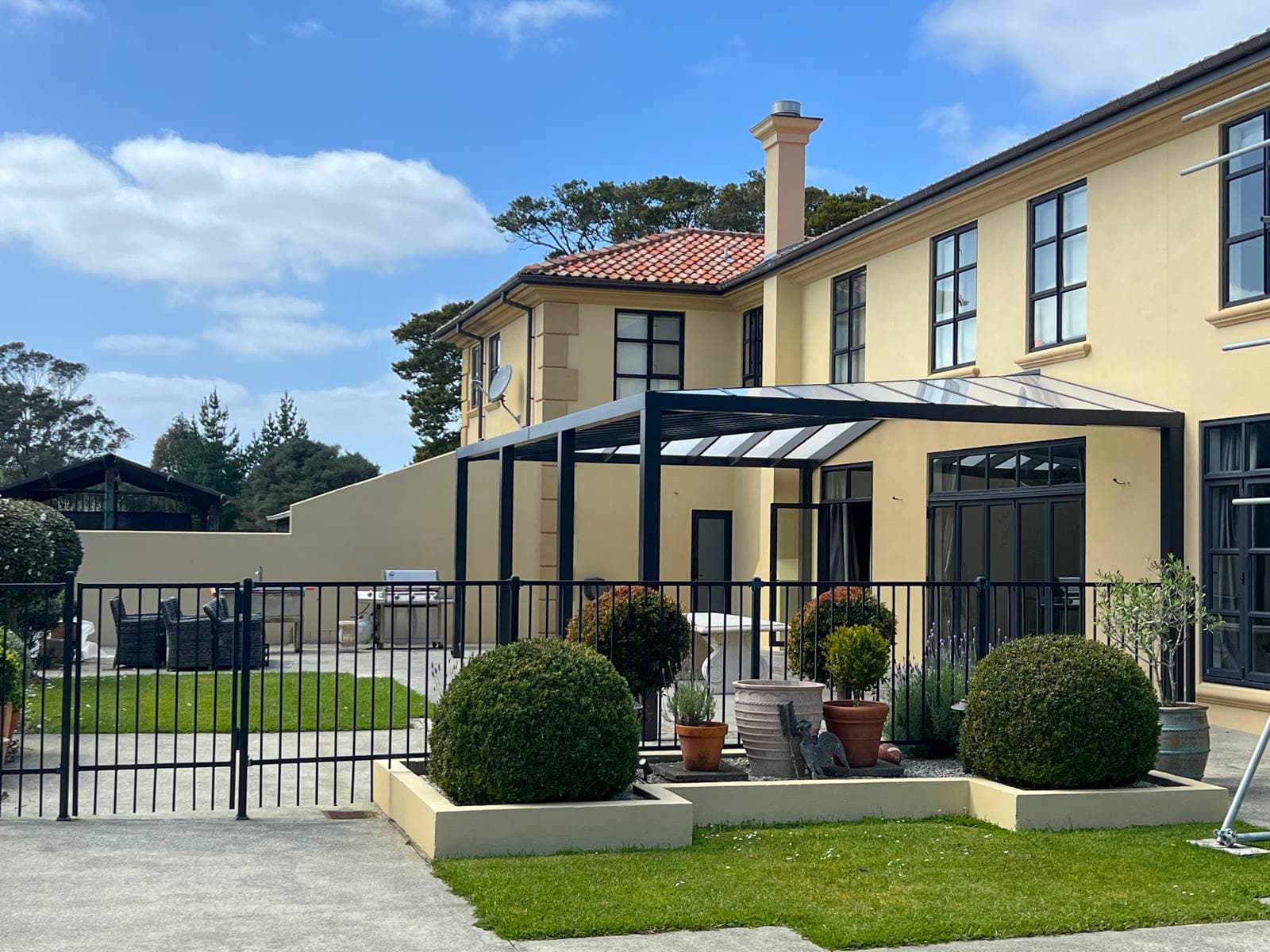
01 / The right fit
Start with the house.
A hip pergola pitches down on all sides, wrapping the space with a composed roof edge and multiple drainage directions. It can integrate with complex rooflines when the hips, junctions, outlets and post positions are coordinated as one project-specific structure.
Works well when
- The pergola is visible from several sides.
- A balanced perimeter is more important than the simplicity of one roof plane.
- The roof must respond to corners or changing façade lines.
We’ll resolve together
- How each roof plane drains and where outlets can go.
- The effect of hips and framing on daylight below.
- Corner connections, post positions and junctions with the house.
02 / What to consider
Resolve the
whole picture.
Consider the materials, installation and everyday use together.
Composed perimeter versus structural complexity
The balanced roof edge comes with more hips and junctions to detail than a pitched form.
Distributed drainage versus simpler discharge
Several falls can organise water around the perimeter, but every outlet and path still needs a clear resolution.
Roof presence versus the existing home
Pitch, colour and member depth determine whether the hip form settles beside the house or competes with it.
Specification & care
The details that follow the design.
Structure and roofing
A central ridge and diagonal hips transfer loads to perimeter beams and posts. Custom flashings step roof sheets around hips while maintaining drainage. Posts can offset to suit doors and paths.
Bay sizes and member depths confirmed by the project-specific design
Hip angles and sheet selection tuned to site
- Four‑sided roof with ridge and hip beams
- Powder‑coated aluminium frame and posts
- Bracket and fixing details resolved for the completed structure
- Custom flashings around hips to manage water
Clear, opal, tinted or solid roof zones considered around daylight and shade
Post locations to open pathways and doors
Integrated downlights and perimeter strip lighting
Drop‑down blinds at prevailing wind faces
Installation and maintenance
The project programme and on-site sequence are confirmed in the proposal after site and supplier checks
Cleaning and inspection follow the current written guidance for the selected frame, roof, gutters and hip junctions
Is a hip darker than other roofs?
Daylight depends on orientation, roof depth, framing and the exact roof sheets. Clear, opal, tinted or solid zones should be assessed against the outdoor area and adjoining rooms.
Can it meet complex walls and flashings?
Custom flashings can step roof sheets around hips. The final junction and drainage details are resolved for the measured building and selected roofing.
See it built / Muriwai
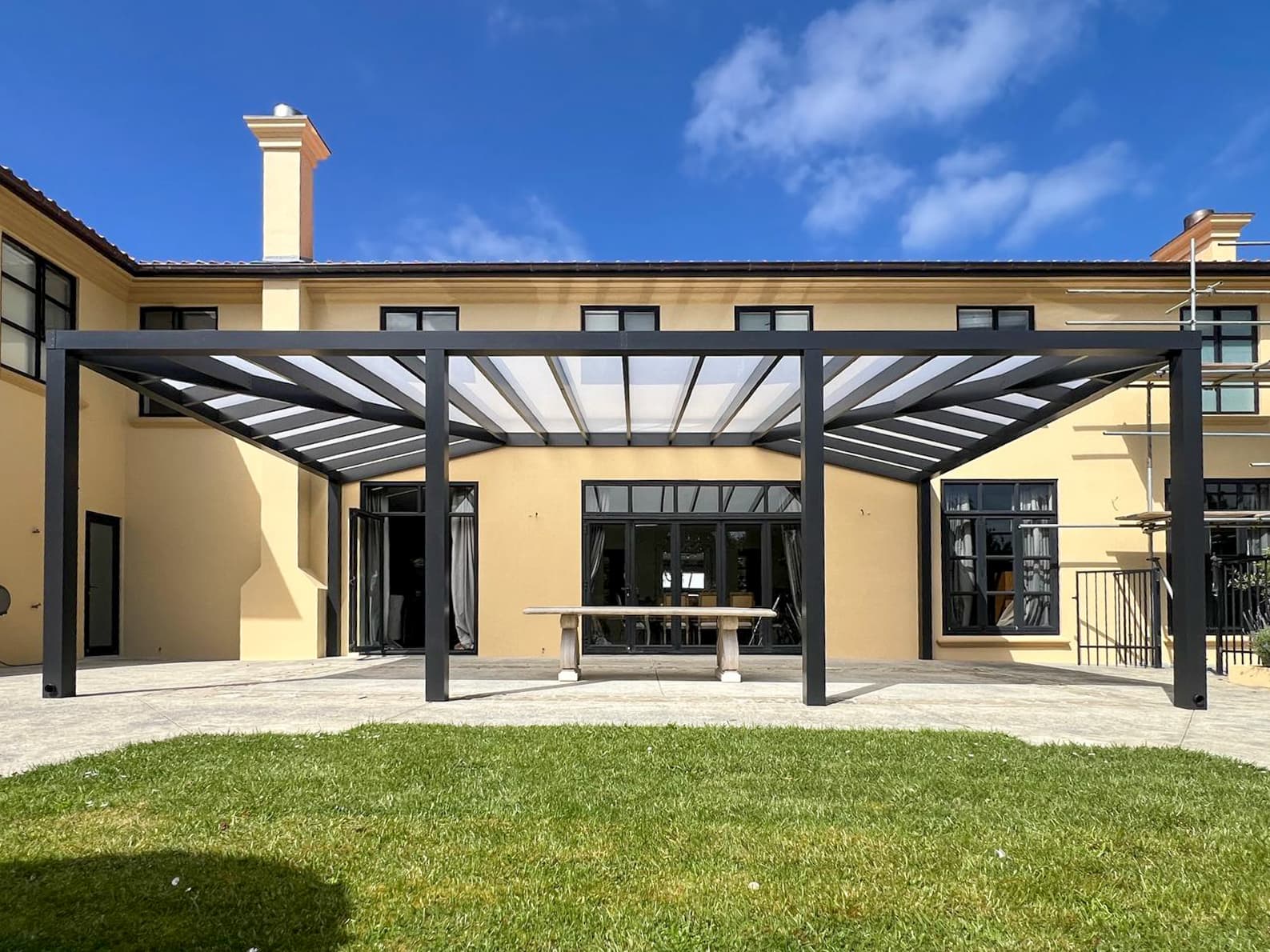
Muriwai Courtyard
The replacement hip pergola kept the established courtyard footprint while coordinating a contemporary frame with the existing home.
Explore Muriwai Courtyard
Image 1 of 2
Compare pergola planning priorities
Read guide
Your place, your project
Find the right form
for your home.
Share your location, a few site photos and what you want from the space.
Send project briefWe’ll confirm the materials, dimensions and site requirements with you.